


Hemp mouthwash shows real promise for calming gum inflammation and reducing certain oral bacteria, based on early clinical and laboratory studies. The main caveat is that larger, long-term human trials are still limited, so the evidence is encouraging rather than final. Use it as a supplement to brushing and interdental cleaning, never as a replacement for them.
TL;DR:
- In a laboratory test, cannabinoid rinses with less than 1% cannabinoid matched 0.2% chlorhexidine, with CBD producing an 18.1 mm inhibition zone.
- A trial lasting 42 days found plaque and bleeding scores improved across all groups, while CBD groups showed larger reductions in bleeding on probing.
- Brush twice daily, clean between teeth daily, then rinse according to the label and spit it out; never swallow the product.
- Hemp seed oil alone is not the cannabinoid extract studied; check for clearly stated CBD or CBG content and an independent lab report.
- No reviewed study measured breath odor, so claims that hemp rinses treat bad breath remain unproven; persistent odor or bleeding warrants a dental visit.
Table of Contents
- What do clinical and laboratory studies show about hemp mouthwash?
- How may hemp mouthwash help gums and the oral microbiome?
- Why does hemp mouthwash work? The proposed mechanisms
- How do you use hemp mouthwash safely?
- What should you look for when choosing a hemp mouthwash?
- Why can you trust this guidance?
- Can hemp mouthwash help with bad breath?
- How do hemp seed oil and CBD extract differ in mouthwash?
- Is hemp mouthwash compatible with the rest of your routine?
- What do real-life experiences tell us?
- When is hemp mouthwash a good choice? A practical perspective
- Try our hemp mouthwash, a recommended option
- FAQ
- Sources
What do clinical and laboratory studies show about hemp mouthwash?
The research on cannabinoid rinses is young, but it points in a consistent direction. Laboratory work and small human trials report antibacterial activity and better gum indices. Here is what the strongest studies found:
- An in vitro evaluation of two cannabinoid-infused mouthwashes, each containing less than 1% cannabinoid by weight, found bactericidal efficacy similar to 0.2% chlorhexidine against dental plaque bacteria.
- A 42-day clinical trial in patients with gingivitis compared rinses with spilanthol and CBD against tea tree oil. Plaque and bleeding scores fell in every group, and the CBD-containing groups showed significantly greater drops in bleeding on probing.
- A placebo-controlled, double-blind randomized trial of CBD gel and toothpaste reported statistically significant gingival improvements after 56 days, with no adverse effects reported.
In the lab comparison, the CBD mouthwash averaged an 18.1 mm zone of inhibition, against 16.8 mm for chlorhexidine. That figure comes from the same in vitro study, and it means the cannabinoid rinse matched a clinical benchmark in a petri dish.
Many of these studies are small, pilot in design or short. A 2024 systematic review concluded that clinical data remain insufficient for definitive conclusions. Treat the findings as a strong signal, not proof.
How may hemp mouthwash help gums and the oral microbiome?
The benefits researchers have measured fall into three groups: clinical changes in the gums, activity against specific bacteria, and early signs of tissue repair.
- Less bleeding and plaque: trial participants using CBD-containing rinses improved on bleeding on probing (BOP) and the approximal plaque index (API), the two endpoints dentists watch most closely in gingivitis.
- Antibacterial and biofilm effects: an in vitro study found that CBD and CBG inhibited Streptococcus mutans, with a minimum inhibitory concentration of 20 µM for CBD and 10 µM for CBG. Multispecies biofilm metabolic activity dropped by up to about 50% at tested concentrations.
- Tissue repair signals: a development study of a hemp extract mouthwash for oral ulcers reported higher collagen type I synthesis and improved wound closure in cell assays. Some research also notes increased saliva production, though this is preclinical.
A gentler microbiome effect matters too. Reducing the metabolic activity of a biofilm is different from wiping out the mouth’s bacteria, and that distinction is part of why researchers keep studying these compounds.
Pro Tip: Judge a rinse by whether you notice changes in your gums over time. Less bleeding when you floss is one practical sign to track.
Why does hemp mouthwash work? The proposed mechanisms
Researchers describe three overlapping actions rather than a single switch.

The first is immune modulation. Cannabinoids appear to lower pro-inflammatory cytokines such as IL-6, IL-8 and IL-12, while raising the anti-inflammatory marker IL-10. Activation of the Nrf2 pathway has also been noted in some studies, and that pathway governs cellular defenses against oxidative stress.
The second is direct antimicrobial activity. CBD and CBG show measurable minimum inhibitory concentrations against oral pathogens in vitro, and they reduce biofilm metabolic activity at the concentrations reported in the laboratory work.
The third is a possible supportive tissue effect, including the wound-healing signals seen in cell models.
Together, these actions explain why a rinse could lower both bacterial load and the inflammatory response that causes gums to bleed. Most of this evidence comes from cell and laboratory models, so the mechanisms remain proposals that clinical work is still testing.
How do you use hemp mouthwash safely?
The dental consensus is plain: mouthwash supplements mechanical cleaning. Belgian dental guidance states that twice-daily brushing with fluoride toothpaste and daily interdental cleaning remain the foundation of oral care, with antiseptic rinses reserved for specific needs or a dentist’s advice. Our own mouthwash frequency guide covers the same ground in more detail.
- Brush twice a day and clean between your teeth at least once daily.
- Rinse with the mouthwash after cleaning, using the amount on the label.
- Swish for 30 seconds and follow your product’s own label.
- Spit it out and do not swallow.
- Wait a few minutes before eating or drinking.
Concentrations in trials varied: some formulations contained less than 1% cannabinoid, while a dental gel trial used 1% CBD. Follow the labeling of the product you choose rather than copying a study.
See a dentist if you have active gum disease, heavy bleeding or persistent pain. Check that the product lists its ingredients clearly and offers third-party lab reports.
What should you look for when choosing a hemp mouthwash?
A short label check separates a considered formula from a vague one.
- Clear cannabinoid labeling: the CBD or CBG concentration should be stated, since effectiveness and tolerance both depend on it.
- Alcohol-free formula: alcohol can sting and dry sensitive tissue, so an alcohol-free rinse is usually gentler.
- Preservative and pH information: transparent makers disclose both, and they affect stability and comfort.
- Third-party lab testing: a certificate of analysis (COA) confirms what is actually in the bottle.
- Formulation notes: some trials paired cannabinoids with spilanthol or compared them with tea tree oil, which shows that formulation changes results.
If a label hides the cannabinoid content or the full ingredient list, treat that as a reason to look elsewhere. Our deeper guide to choosing a hemp mouthwash walks through ingredients in more depth.
Why can you trust this guidance?
This article discusses our product development. We build fluoride-free, hemp-based oral care products and publish content grounded in published research. For more background on the ingredients, read our overview of the advantages of hemp oral products and our practical guide to CBD mouthwash for healthy gums.
Can hemp mouthwash help with bad breath?
Bad breath, or halitosis, usually starts with bacteria breaking down food debris and dead cells on the tongue and between the teeth. Inflamed gums add to the problem, because bleeding and plaque buildup give those bacteria more to feed on.
That is where the research becomes relevant. A rinse that lowers bacterial counts and calms gum inflammation could, in principle, reduce the sources of odor. The antibacterial results against plaque bacteria and the lower bleeding scores reported in trials make this a possibility, not a demonstrated effect on breath odor. No study we reviewed measured breath odor directly, so this benefit is a reasonable inference and not a demonstrated outcome.
Hemp rinses may also have indirect effects, but the evidence provided here does not establish that they increase saliva production or reduce bad breath.
Practical steps matter more than any single product. Brush your tongue gently, clean between your teeth, and drink water through the day. If bad breath persists despite good hygiene, a dentist should check for gum disease, cavities or a medical cause. Persistent odor with bleeding gums is a particular signal to book a visit.
Treat a hemp rinse as one helpful part of a routine, not a stand-alone cure for chronic halitosis.

How do hemp seed oil and CBD extract differ in mouthwash?
The two ingredients come from the same plant but do different jobs, and labels often blur them.
Hemp seed oil comes from the seeds. It is a different ingredient from CBD extract, so the findings from studies of cannabinoid-containing products should not be attributed to hemp seed oil alone.
CBD extract, along with cannabinoids such as CBG, is the type of ingredient tested in the studies described here. The in vitro work used mouthwashes with less than 1% cannabinoid by weight, and the biofilm research reported specific inhibitory concentrations for CBD and CBG. Whole hemp extract also showed anti-inflammatory and antioxidant activity in the ulcer formulation study.
For you as a buyer, the practical question is simple: which of these does the label actually list, and at what concentration? A product that lists only hemp seed oil and gives no cannabinoid content is not the same as the cannabinoid-containing products studied here.
Some formulas combine both. Check whether the label states which ingredients are present and how much of each. Once again, the third-party lab report is the clearest proof of what you are buying.
Is hemp mouthwash compatible with the rest of your routine?
Yes, it fits alongside standard oral care because it is designed to supplement it. Brushing with fluoride toothpaste, cleaning between your teeth and regular dental visits all stay in place. Dental guidance is consistent that mouthwash adds to mechanical cleaning and does not substitute for it.
A few combinations deserve a note:
- With fluoride toothpaste: brush first, then rinse. If you want to keep fluoride on your teeth, avoid rinsing with plain water right after brushing, and use the mouthwash at a separate moment, such as midday or after lunch.
- With chlorhexidine: ask your dentist how to use it and whether to combine it with another rinse. A clinical partner explains how to use chlorhexidine mouthwash correctly, and it is worth reading to understand why researchers compare cannabinoid rinses against it. If your dentist prescribes it, follow that plan and ask before adding another rinse.
- With interdental tools and tongue cleaning: these remain essential, since a rinse cannot remove plaque that has already stuck to surfaces.
- With other products: ask a dentist or pharmacist before combining active rinses if you are unsure whether they are suitable together.
Gum health also depends on habits beyond the bathroom. General gum-health guidance stresses a balanced diet, limited sugar and the fact that gingivitis is reversible with timely treatment and good hygiene.
What do real-life experiences tell us?
We will not paraphrase anecdotes as evidence. What can be said honestly comes from the trials themselves and the way participants were supported.
In the gingivitis trial, expanded reporting in the full clinical paper noted improved bleeding and plaque scores in the groups using CBD and spilanthol rinses. The authors also stressed that patient education and hygiene instruction were important co-factors.
That points to what people can realistically expect. The studies reported changes in bleeding on probing and plaque indices, rather than establishing an immediate effect. The CBD gel and toothpaste trial likewise reported improvements after 56 days and no adverse effects.
If you try a hemp rinse, keep a simple log of bleeding when you floss, morning breath and gum tenderness. Bring that log to your next dental visit, because your dentist can compare it with clinical measurements. A recent review reminds us that evidence is still developing and that larger, long-term human trials are needed, so your own experience is useful but not a substitute for them.
When is hemp mouthwash a good choice? A practical perspective
My view is that hemp mouthwash may be worth considering if you have mild gum concerns, but the evidence is still developing. Check the ingredients and ask a dentist whether it suits your needs. Realistic expectations matter: it is a supporting player, and the evidence does not establish it as a substitute for good oral hygiene or dental care. Build the habit into a fixed moment of your day and assess whether it suits you.
— Veronica
Try our hemp mouthwash, a recommended option
Our STOP Mouthwash is hemp-based, and we publish research related to its ingredients. At 20,00 € one-off, it sits in our range alongside the toothpaste and oral spray.
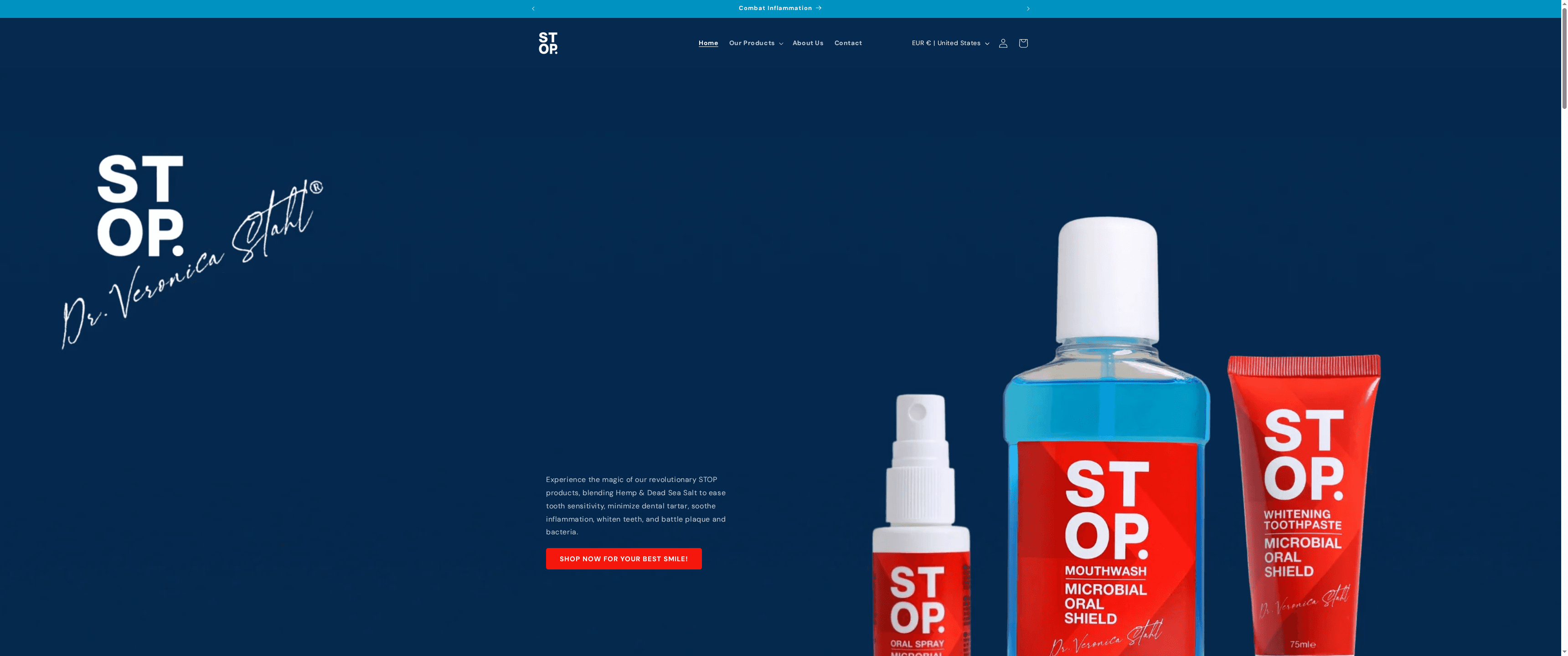
- Fluoride-free, hemp-based formula
- Developed under the direction of Dr. Veronica Stahl
- Ingredient details and research context available on the product page
Read the product details before you buy, then view STOP Mouthwash at Stop-oralcare to order.
FAQ
Is hemp mouthwash effective for gum health?
Early evidence says it can help. Small clinical trials reported lower bleeding on probing and plaque scores in people with gingivitis, and a systematic review notes that clinical data remain insufficient for definitive conclusions.
Is it good to use mouthwash every day?
Whether a daily rinse is appropriate depends on the product and your oral-health needs. Follow its label and ask a dentist if you are unsure. Dental guidance treats it as a supplement to brushing and interdental cleaning, and antiseptic rinses are usually reserved for specific needs or a dentist’s advice.
What is the most natural mouthwash for inflamed gums?
An alcohol-free rinse with a clearly labeled plant-based ingredient, such as hemp-derived CBD, is one option to consider. Look for clear ingredient information and consider whether independent testing is available, since “natural” alone does not establish quality.
Which mouthwash should you use for bleeding gums?
Choose a gentle, alcohol-free rinse and pair it with careful brushing and flossing. If your gums bleed, consult a dentist, because bleeding can signal a problem that mouthwash alone may not resolve.
Sources
- Cannabinoids infused mouthwash products are as effective as chlorhexidine on inhibition of total-culturable bacterial content in dental plaque samples
- Evaluation of the Effectiveness of a Mouthwash Containing Spilanthol and Cannabidiol on Improving Oral Health in Patients with Gingivitis-Clinical Trial
- Phytocannabinoids and gingival inflammation: Preclinical findings and a placebo‐controlled double‐blind randomized clinical trial with cannabidiol
- Antibiofilm and Immune-Modulatory Activity of Cannabidiol and Cannabigerol in Oral Environments—In Vitro Study
- Cliniquekeller