


Yes, falling estrogen and progesterone during perimenopause and menopause commonly increase the risk of gum inflammation. The first step is a gentle, evidence-based oral care routine paired with steady hydration, and a dental visit if bleeding or swelling persists beyond two weeks. We formulate our fluoride-free range at Stop-oralcare with this hormonal transition in mind.
TL;DR:
- Brush gently twice daily for two minutes with a soft brush, and clean between teeth daily; avoid alcohol rinses and tobacco to limit irritation.
- If bleeding, swelling, or discomfort persists beyond two weeks, or you develop loose teeth, severe pain, or fever, schedule a dental evaluation.
- Tell your dentist about menopause, hormone therapy, and medications: antidepressants, sleep aids, and some blood pressure drugs can reduce saliva, while bisphosphonates affect healing.
- Evidence on hormone therapy is mixed: some studies report better saliva flow or gum measures, but it is not a treatment by itself.
- If dry mouth or cavity risk is high, ask your dentist about medicine that stimulates saliva or prescription fluoride; natural products cannot replace a dental evaluation.
Table of Contents
- How Hormonal Changes Drive Gum Inflammation During Menopause
- Common Oral Symptoms to Watch For in Perimenopause and Menopause
- A Home Routine That Helps Reduce Gum Inflammation
- When to See a Dentist and What the Visit Involves
- Medical Options Including Hormone Therapy: A Balanced View
- Practical Technique Tips for Sensitive, Inflamed Gums
- Nutritional Support That Helps Gum Health During Menopause
- Do Natural Oral Care Products Help With Menopause-Related Gum Inflammation
- Medication Interactions Worth Discussing With Your Dentist
- Lifestyle Factors That Make Gum Inflammation Better or Worse
- A Clinician’s Note on Midlife Oral Health
- How Our Products Fit Into a Gum-Friendly Routine
- FAQ
- Sources
How Hormonal Changes Drive Gum Inflammation During Menopause
Gingival and salivary tissues carry estrogen receptors, which means the hormonal decline of perimenopause and menopause directly affects how these tissues respond to bacterial plaque. As estrogen falls, immune signaling shifts and inflammatory mediators rise, making gum tissue more reactive to the same amount of plaque that caused no problems before.
Saliva production and composition change alongside this hormonal shift. Reduced saliva volume weakens one of the mouth’s primary defenses against bacteria, and altered salivary pH can disturb the balance of the oral microbiome. Estrogen also plays a role in bone metabolism, and lower levels are tied to reduced alveolar bone density, which can make the structures supporting teeth more vulnerable to periodontal breakdown.
A systematic review on menopause and periodontal health found that menopausal women often show poorer periodontal parameters, including increased probing depths and clinical attachment loss, although the overall certainty of the evidence is moderate to low due to study variability. The review points to several converging mechanisms:
- Estrogen deficiency alters immune modulation and raises local inflammation.
- Bone metabolism changes reduce support around the teeth.
- Salivary function and the oral microbiome shift together, compounding the effect.
Common Oral Symptoms to Watch For in Perimenopause and Menopause
Oral symptoms during this transition rarely appear alone. Xerostomia, or dry mouth, is among the most frequent complaints, and it raises cavity risk because saliva no longer neutralizes acids or clears food debris as effectively. Some women also experience burning mouth syndrome, a persistent burning or tingling sensation with no visible lesion to explain it.
Gum tissue itself often becomes more sensitive: redness, swelling, and bleeding on brushing are common, even in women with no prior history of gum disease. Taste changes, occasional mouth ulcers, a higher susceptibility to oral candidiasis, and increased tooth sensitivity round out the typical picture.
- Dry, sticky saliva with a noticeable increase in cavities or rough tooth surfaces.
- Burning or tingling sensations on the tongue, lips, or palate without a visible cause.
- Red, swollen, or easily bleeding gums, sometimes with a metallic or altered taste.
A PubMed review on menopause and oral symptoms identifies xerostomia, burning mouth syndrome, and bleeding gums as recurring markers tied to hormonal changes, underscoring why these symptoms deserve professional attention rather than being dismissed as a normal part of aging.
A Home Routine That Helps Reduce Gum Inflammation
Consistent, gentle care does more for inflamed gums than aggressive brushing, which can worsen recession rather than resolve the underlying problem, according to Harvard Health. A practical daily routine looks like this:
- Brush gently twice daily for at least two minutes, using a soft-bristled brush angled toward the gumline.
- Clean between teeth once a day with floss or interdental brushes sized to fit your gaps.
- Sip water frequently throughout the day rather than drinking large amounts infrequently.
- Use sugar-free gum or mints to stimulate saliva flow between meals.
- Avoid alcohol-containing mouthrinses and tobacco, both of which worsen dryness and irritation.
- Ask your dentist whether a higher-concentration fluoride product is appropriate for your risk level.
The NHS gum disease guidance recommends this same twice-daily, two-minute brushing standard alongside daily interdental cleaning as the foundation of periodontal care, regardless of the underlying cause of inflammation.
Pro Tip: After a professional cleaning or when gums feel especially sensitive, apply a small amount of fluoride toothpaste directly to the sensitive area and avoid rinsing it away, which helps build a protective layer over time.
Most mild gingivitis improves within about two weeks of consistent, optimized home care. If bleeding, swelling, or discomfort continues past that point, it signals a need for professional evaluation rather than more aggressive brushing.
When to See a Dentist and What the Visit Involves
Certain signs call for a dental appointment rather than continued home management: bleeding that persists beyond two weeks, loose teeth, severe or localized pain, visible swelling, or any systemic signs like fever. The NHS is clear that persistent bleeding despite good hygiene warrants assessment.
A typical visit includes periodontal probing to measure gum pocket depth, a saliva flow assessment if dryness is a concern, a mucosal exam for lesions or unusual tissue changes, and a review of your medications and medical history.
- Mention menopausal status and any hormone replacement therapy explicitly, since it helps your dentist tailor the treatment plan.
- Expect possible scaling or root planing if plaque and tartar have accumulated below the gumline.
- Ask about topical fluoride or saliva-stimulating prescriptions if dryness is significant.
- Request a referral to a periodontist if inflammation is advanced or not responding to standard care.
Medical Options Including Hormone Therapy: A Balanced View
Hormone replacement therapy sits in a genuinely mixed evidence space when it comes to oral health. A PMC review on menopause and oral health notes that some studies report improved salivary flow or periodontal markers with HRT, while others find limited or inconsistent benefit. This is a conversation for your physician, considered alongside your broader menopausal symptoms, not a guaranteed fix for gum inflammation on its own.
Beyond HRT, clinicians may suggest other targeted options depending on what a dental exam reveals:
- Saliva-stimulating medications for significant, persistent dry mouth.
- Topical anti-inflammatory agents for localized gum irritation.
- Prescription-strength fluoride for women with elevated cavity risk.
The strongest outcomes tend to come from a coordinated plan between your dentist and your physician, rather than either provider working from a partial picture of your symptoms.
Practical Technique Tips for Sensitive, Inflamed Gums
Small adjustments to technique often matter more than switching products. Angling bristles at 45 degrees toward the gumline, using light pressure, and choosing interdental brushes sized to your actual gaps all reduce irritation while still clearing plaque effectively.
- Brief your dentist on your full picture: symptom timeline, current self-care routine, medications, HRT status, and any oral care products you already use.
- Favor formulations designed for sensitive or inflamed gums, including fluoride-free options with soothing natural ingredients, as one part of a dentist-reviewed plan.
- Reassess your routine every few months, since gum sensitivity during menopause can shift as hormone levels continue to change.
Nutritional Support That Helps Gum Health During Menopause
Nutrition plays a supporting role alongside hormonal changes, particularly for bone and tissue health. Vitamin D and calcium work together to support the alveolar bone that holds teeth in place, which matters given the bone density changes already associated with declining estrogen.
Phytoestrogens, plant compounds found in foods like soybeans, flaxseed, and chickpeas, have drawn interest for their weak estrogen-like activity, though their direct effect on gum tissue specifically is not as well established as their broader role in menopausal symptom management. A varied diet rich in these foods, alongside adequate protein and vitamin C for tissue repair, supports the same systems involved in gum healing.
Hydration deserves a mention here too, since it works hand in hand with diet to maintain saliva volume. Limiting sugary snacks and acidic beverages reduces the load on gum tissue that is already more reactive during this hormonal transition. None of these nutritional steps replace professional dental care when inflammation is already present, but they create a better foundation for tissue to heal once a dentist has addressed the underlying issue.

Do Natural Oral Care Products Help With Menopause-Related Gum Inflammation
Natural, fluoride-free formulations have gained attention as an option for women managing sensitive or inflamed gums during menopause, often because they pair soothing ingredients with a gentler overall profile. Hemp-derived compounds and Dead Sea minerals are two ingredients that appear in this category, chosen for properties that support calming irritated tissue and maintaining mineral balance in the mouth.
We offer toothpaste, mouthwash, and oral spray formulated to address midlife gum sensitivity with gentle cleaning that avoids fluoride or harsh abrasives. That approach fits naturally into the twice-daily brushing and interdental cleaning routine already recommended for gingivitis, since gentler products are easier to use consistently, and consistency is what drives improvement.
Natural formulations are not a substitute for professional evaluation when bleeding or swelling persists past two weeks. They function best as the daily-use layer of a plan that still includes dental checkups and, when needed, in-office treatment like scaling or root planing.
Medication Interactions Worth Discussing With Your Dentist
Several medications commonly used during menopause can affect oral health in ways worth flagging to your dentist. Hormone therapy itself can shift salivary flow, as noted in the mixed evidence from the PMC review. Other medications prescribed for related symptoms, such as antidepressants sometimes used for mood changes or sleep aids, are well known to contribute to dry mouth, which compounds the xerostomia already linked to hormonal decline.
Blood pressure medications, increasingly relevant as cardiovascular risk shifts after menopause, can also reduce saliva flow in some women. Bisphosphonates, sometimes prescribed for bone density concerns that overlap with menopausal changes, carry specific dental considerations around healing after extractions or oral surgery, which makes disclosing their use to your dentist particularly important.
None of this means avoiding necessary medications. It means giving your dentist a complete list so they can adjust your care plan, whether that means recommending a saliva substitute, choosing a gentler oral care product, or timing certain dental procedures around your medication schedule.

Lifestyle Factors That Make Gum Inflammation Better or Worse
Smoking remains one of the clearest lifestyle factors that worsens gum inflammation at any life stage, and its effects compound with the tissue vulnerability already present during menopause. Stress is a less obvious but real contributor, since elevated cortisol can influence immune response and, for some women, lead to habits like teeth grinding that put additional strain on gum tissue.
Diet matters in both directions. Diets high in refined sugar feed the bacteria responsible for plaque buildup, while diets rich in whole foods, adequate protein, and the vitamins already discussed support tissue repair. Alcohol consumption, like smoking, tends to dry out oral tissue further, adding another layer of irritation on top of hormonally driven dryness.
A practical action plan for gum bleeding from a general dentistry practice notes that short-term improvements in bleeding often follow quickly once contributing habits like harsh brushing or tobacco use are addressed, which reinforces how much lifestyle choices influence day-to-day gum health, separate from the hormonal backdrop of menopause.
A Clinician’s Note on Midlife Oral Health
Gum changes during menopause are not a cosmetic inconvenience. They are a signal worth sharing openly with both your dentist and your physician, since coordinated care consistently produces better outcomes than treating the mouth in isolation.
— Veronica
How Our Products Fit Into a Gum-Friendly Routine
Our fluoride-free oral care range is designed for sensitivity and inflammation that can surface during menopause, incorporating hemp and Dead Sea minerals rather than harsher conventional ingredients.
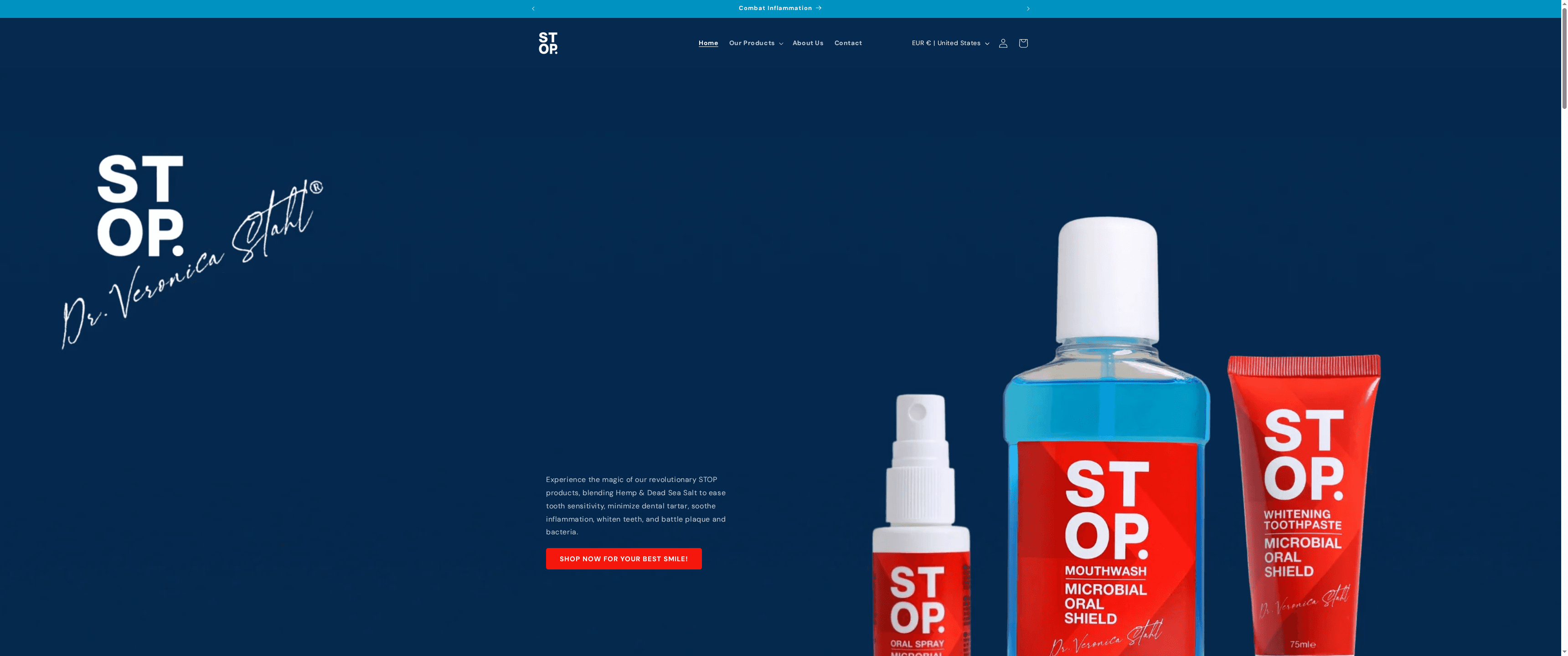
- STOP | Protective & Whitening Toothpaste (12,99 €) fits into your twice-daily brushing step.
- STOP | Mouthwash (20,00 €) works as an alcohol-free rinse after brushing or midday.
- STOP | Protective Oral Spray (11,99 €) offers quick relief between brushings when dryness or irritation flares.
| Product | Price | Role in your routine |
|---|---|---|
| STOP | Protective & Whitening Toothpaste | 12,99 € |
| STOP | Mouthwash | 20,00 € |
| STOP | Protective Oral Spray | 11,99 € |
Add these into the hygiene steps already outlined, skip alcohol-based rinses while you do, and visit our product range to start building a gentler routine today.
FAQ
What is a good diet plan for perimenopause?
A supportive diet for perimenopause emphasizes calcium and vitamin D for bone health, phytoestrogen-rich foods like soy and flaxseed, and adequate protein and vitamin C to support tissue repair, including gum tissue. Limiting refined sugar and alcohol also helps reduce the inflammatory load on the body during this transition.
Is menopause a natural process?
Yes, menopause is a natural biological transition marked by declining estrogen and progesterone as ovarian function winds down. While it is not a disease, the hormonal shifts it causes, including effects on gum tissue and saliva, often benefit from proactive management rather than being left unaddressed.
How to stay hydrated during menopause?
Sipping water consistently throughout the day works better than large infrequent amounts, and sugar-free gum or mints can stimulate saliva flow between meals, as recommended by the ADA’s xerostomia guidance. Avoiding alcohol-containing mouthrinses and limiting caffeine and alcohol intake also helps preserve natural moisture in the mouth.
What are the signs and symptoms of early perimenopause?
Early perimenopause often brings irregular periods, hot flashes, sleep disruption, and mood changes, alongside oral symptoms like dry mouth or gum sensitivity that are frequently overlooked. Because these oral signs can appear before other symptoms are obvious, clinical guidance suggests paying attention to changes in saliva, taste, or gum bleeding as part of the broader picture.
Sources
- PubMed article on menopause and oral symptoms (2026)
- NHS — Gum disease guidance
- PMC review on menopause and oral health (2020)