


For dentin hypersensitivity and a fluoride-free routine, a mineral mouthwash built on nano-hydroxyapatite is the better-supported choice, with meta-analysis data showing it reduces sensitivity by roughly 23% more than fluoride rinses. For population-level caries prevention, fluoride remains the agent recommended in WHO guidance. Readers prioritizing a fluoride-free, mineral-based rinse can review mineral-based rinse options available on the market.
TL;DR:
- People with recent cavities, dry mouth, or dentist identified high caries risk should keep fluoride in their routine and consult a dentist.
- Children who cannot reliably spit should avoid fluoride rinses because swallowing during enamel development can raise fluorosis risk; adults should follow label directions.
- Hydroxyapatite rinse can be paired with fluoride toothpaste without interference, so sensitivity relief does not require giving up baseline fluoride exposure.
- Use fluoride rinse for about one minute without dilution, preferably apart from brushing, to avoid washing away toothpaste fluoride; daily and weekly strengths differ.
Table of Contents
- What mineral and fluoride mouthwashes are and how they work
- What the clinical evidence shows for each option
- Who should choose mineral and who should choose fluoride
- How to use mouthwash for the best results
- How Stop Oral Care’s formulation approach fits the mineral route
- Safety considerations specific to fluoride and mineral rinses
- Taste and everyday experience: what differs between the two
- Environmental and sustainability considerations
- Regulatory status of mineral and fluoride mouthwash formulations
- Building a natural routine around a mineral mouthwash
- A dentist’s view on making this choice personally
- Try Stop Oral Care’s fluoride-free mineral mouthwash
- FAQ
- Sources
What mineral and fluoride mouthwashes are and how they work
Fluoride mouthwashes contain sodium fluoride, stannous fluoride, or amine fluoride, typically at over-the-counter concentrations such as 0.05% (about 225 ppm) for daily rinses or 0.09% (900 ppm) for weekly use, as outlined in the ADA’s chairside guide. Fluoride ions incorporate into the enamel crystal lattice, forming fluorapatite, which is more resistant to acid dissolution than the original hydroxyapatite structure.
Mineral mouthwashes, by contrast, deliver biomimetic hydroxyapatite particles, often at a nano scale, that are chemically similar to the mineral already present in enamel and dentin. Other formulations in this category incorporate zinc compounds, calcium-phosphate complexes, or stannous ions used independently of fluoride. These ingredients work through distinct routes:
- Hydroxyapatite particles physically occlude exposed dentin tubules and deposit a mineral layer on the tooth surface, which blunts the nerve response that causes sensitivity.
- Stannous ions, whether paired with fluoride or used alone, interact with the salivary pellicle and can reduce acid-driven mineral loss during erosive challenges, as shown in in-situ pellicle research.
- Calcium-phosphate blends aim to supply the raw minerals enamel needs for natural remineralization without relying on a fluoride-driven reaction.
Readers interested in the mechanics of biomimetic remineralization can find a fuller explanation in our guide to how remineralizing mouthwash protects enamel.
What the clinical evidence shows for each option
The strongest evidence for mineral mouthwash centers on dentin hypersensitivity. A systematic review and meta-analysis of 44 clinical trials found that nano-hydroxyapatite products reduced hypersensitivity by about 39.5% compared with placebo and by about 23% more than fluoride, a difference that held across multiple trial designs. That gap is notable because fluoride has long been the default recommendation for sensitive teeth, yet this pooled data suggests hydroxyapatite performs at least as well, and often better, for this specific outcome.
A meta-analysis of 44 trials found nano-hydroxyapatite reduced dentin hypersensitivity by roughly 23% more than fluoride-based products, according to this systematic review, which signals a meaningful clinical difference for people whose primary complaint is sensitivity rather than cavity risk.
Smaller randomized trials add texture to this picture. One trial comparing a high-density hydroxyapatite mouthwash against hydroxyapatite toothpaste found both produced immediate reductions in Schiff Air Index and visual analog scale sensitivity scores, with no statistically significant difference between the two delivery formats, based on a 2025 clinical trial summary. That finding supports using a mineral mouthwash as a standalone option rather than only as an adjunct to toothpaste.
Fluoride’s evidence base, meanwhile, is built around caries prevention rather than sensitivity relief. WHO guidance confirms that fluoride toothpaste at 1,000 to 1,500 ppm remains an effective, foundational intervention against tooth decay, and that topical fluorides are standard components of preventive dental programs. A network meta-analysis further found that using a fluoride mouthwash after fluoride toothpaste produced a modest additional remineralization benefit, a mean increase of 2.4%, which is real but limited in magnitude.
For readers concerned about acid erosion rather than decay, stannous-containing rinses offer a third evidence stream. An in-situ pellicle study found that stannous ions significantly reduced acid-induced demineralization and altered the protective pellicle layer, an effect distinct from fluoride’s remineralizing action, as reported in this 2019 study.
- Hydroxyapatite mouthwash: best-supported for dentin hypersensitivity, with effects documented in short-term trials.
- Fluoride mouthwash: best-supported for population-level caries prevention, with decades of guideline backing.
- Stannous-containing rinses: distinct evidence for erosion protection, separate from either sensitivity or caries outcomes.
The practical takeaway is that these two categories are not solving the same problem for every user. Someone managing sensitive teeth without active decay risk is working from a different evidence base than someone with a history of cavities who needs sustained fluoride exposure.
Who should choose mineral and who should choose fluoride
Choosing between the two comes down to a short set of priorities, best worked through in order.
- Identify the primary goal. Sensitivity relief points toward hydroxyapatite; active caries risk points toward fluoride.
- Consider age. Fluoride mouthrinses are generally not recommended for young children who cannot reliably spit, due to ingestion and fluorosis risk during enamel development.
- Review dental history. A pattern of new cavities or high sugar exposure favors sticking with a fluoride-based routine alongside professional guidance.
- Check compatibility. A hydroxyapatite mouthwash can be layered with a fluoride toothpaste for readers who want both mechanisms, since the two do not cancel each other out.
A person with no cavities in years but persistent cold-sensitivity is a strong candidate for a fluoride-free mineral rinse. A person with several recent fillings or a dry mouth condition that elevates caries risk is better served by maintaining fluoride exposure, ideally with a dentist’s input.
Pro Tip: If you are unsure which category fits your situation, bring both your sensitivity symptoms and your last cavity count to your next dental visit and ask directly which mechanism your mouth needs.
Nonfluoride agents are generally positioned as adjuncts rather than replacements for higher-risk patients, a distinction the ADA’s nonfluoride guidance makes explicit for patients at elevated caries risk.
How to use mouthwash for the best results
Timing and consistency matter more than the specific brand chosen. For fluoride rinses, swish for about one minute without diluting the product with water, since dilution lowers the active fluoride concentration reaching the enamel surface.
- Many clinicians advise rinsing with fluoride mouthwash at a separate time from brushing, such as after lunch, so the fluoride left on the teeth from toothpaste is not immediately rinsed away.
- Daily-strength fluoride rinses sit around 0.05% (225 ppm), while weekly-strength products run closer to 0.09% (900 ppm), per the ADA chairside guide.
- Hydroxyapatite mouthwashes used in trials were generally applied once or twice daily, consistent with standard oral hygiene routines.
- Mixing regimens works: a hydroxyapatite mouthwash can follow a fluoride toothpaste without interference, giving sensitivity relief and baseline fluoride exposure together.
Children, and anyone with a swallowing reflex that makes spitting unreliable, should avoid fluoride rinses and use age-appropriate, fluoride-free alternatives instead. A step-by-step routine for sensitive teeth is available in our natural mouthwash usage guide.
How Stop Oral Care’s formulation approach fits the mineral route
Our mouthwash formulation is fluoride-free and built on minerals and botanical extracts inspired by natural oral care principles. The ingredient logic follows the same biomimetic principle documented in hydroxyapatite research: supply minerals the tooth surface can use directly rather than relying on a fluoride-driven chemical conversion.
- Dead Sea minerals contribute a naturally occurring mineral profile intended to support the tooth surface without added fluoride.
- Hemp extract is included for its role in supporting gum comfort as part of a broader natural oral care approach.
- The formulation is designed to pair with complementary products suitable for a fluoride-free oral care routine.
Readers who want a deeper look at formulation choices across mineral mouthwash products can consult our 2026 guide to mineral-based mouthwash, and those specifically interested in hemp-based formulations for gum sensitivity can review our guide to choosing CBD mouthwash.
Safety considerations specific to fluoride and mineral rinses
Fluoride’s main safety consideration is dose-dependent and tied to age. Young children who swallow fluoride mouthwash repeatedly during enamel formation face a risk of dental fluorosis, which is why fluoride rinses are generally restricted to children old enough to reliably spit rather than swallow. Adults face minimal risk from standard OTC concentrations when used as directed, though anyone with a known fluoride sensitivity should avoid it and discuss alternatives with a dentist.
Mineral mouthwashes built on hydroxyapatite carry a different safety profile. Because hydroxyapatite is chemically similar to the mineral already in teeth and bone, ingestion risk is lower, which makes these rinses a reasonable option for households with young children or anyone who prefers to avoid fluoride ingestion entirely. The main consideration here is ingredient-specific allergy rather than systemic toxicity: anyone with a known sensitivity to a specific additive, such as a flavoring agent or a botanical extract like hemp, should review the ingredient list before switching products.
Stannous-containing rinses, whether paired with fluoride or not, can cause temporary tooth staining or a metallic taste in some users, a cosmetic effect rather than a health risk, though it is worth knowing before committing to a stannous-based routine.
Anyone managing a complex medical condition, taking medications that affect saliva production, or caring for a child’s oral care routine should raise mouthwash selection with a dentist rather than relying on general guidance alone.

Taste and everyday experience: what differs between the two
Taste is one of the more practical reasons people switch between these two categories, even when the clinical case is sound. Fluoride mouthwashes vary widely by brand, but many classic formulations use a strong mint and alcohol base that some users find harsh, particularly those with dry mouth or mucosal sensitivity, where alcohol content can cause a stinging sensation.
Mineral mouthwashes built on hydroxyapatite and natural mineral bases tend toward milder, often alcohol-free formulations. This matters beyond comfort: an alcohol-free rinse is generally easier to tolerate for users with dry mouth, a group that already faces elevated cavity risk because reduced saliva flow limits the mouth’s natural buffering capacity. Readers whose dry mouth is linked to vocal strain or extended speaking and singing can find supporting guidance in this resource on managing dry mouth on stage.
Texture differs as well. Hydroxyapatite particles can leave a faint mineral or slightly chalky sensation immediately after rinsing, which some users initially notice more than they would with a conventional fluoride rinse, though this sensation typically fades within the rinse’s recommended time and does not indicate any problem with the product.
Neither category has an objectively “better” sensory profile; the right fit depends on whether a user prioritizes a strong, familiar mint sensation or a gentler, mineral-forward rinse that is easier to use daily without mouth irritation. For many switching away from conventional products, the adjustment period is short, typically a matter of days.

Environmental and sustainability considerations
Ingredient sourcing differs meaningfully between these two mouthwash categories. Fluoride compounds used in oral care are manufactured chemical salts, and their production and disposal are subject to standard industrial chemical regulations rather than any particular sustainability framework; most environmental discussion around fluoride centers on municipal water fluoridation rather than mouthwash itself.
Mineral mouthwash formulations built on naturally sourced ingredients, such as Dead Sea minerals, draw from a mineral-rich body of water rather than a synthesized compound, which appeals to users who prioritize naturally derived ingredients in their personal care choices. Hydroxyapatite itself can be produced synthetically or derived from natural sources, and formulators vary in which approach they use, so readers who care about sourcing should check a given product’s ingredient documentation rather than assuming all hydroxyapatite is identical in origin.
Packaging and plastic use remain a separate consideration that applies across both categories, since most mouthwash, regardless of active ingredient, is sold in plastic bottles. Neither fluoride nor mineral formulations have an inherent packaging advantage; any sustainability gain depends on the specific brand’s packaging choices rather than the active ingredient itself.
For readers weighing environmental factors alongside oral health needs, the more actionable distinction is ingredient origin rather than a blanket claim that one category is more sustainable than the other.
Regulatory status of mineral and fluoride mouthwash formulations
Fluoride mouthwashes occupy a well-established regulatory category. Concentrations and labeling are guided by professional dental bodies, and the ADA’s evidence-based guidance sets out specific strength ranges for over-the-counter and prescription-strength products, alongside WHO recommendations supporting fluoride’s role in caries prevention programs worldwide.
Mineral mouthwashes built on hydroxyapatite and other mineral blends are generally marketed and regulated as cosmetic or oral hygiene products rather than under the same therapeutic-drug frameworks that govern higher-concentration fluoride treatments in many markets. This does not mean they lack oversight: ingredient safety, labeling accuracy, and manufacturing standards still apply under general cosmetic and personal care product regulations. It does mean the clinical claims made for hydroxyapatite rinses rest on the published trial and meta-analysis data referenced earlier rather than the decades-long regulatory track record fluoride holds as an approved therapeutic agent for caries prevention.
For readers in markets where fluoride products carry specific labeling or age-restriction requirements, checking local pharmacy or dental association guidance remains the most reliable way to confirm what applies to a specific product, since regulatory frameworks vary by country and this distinction should not be treated as uniform worldwide.
Building a natural routine around a mineral mouthwash
Readers moving toward a fluoride-free routine generally get the most consistent results by pairing products designed to work together rather than combining items with conflicting ingredient philosophies. A mineral-based mouthwash, formulated with minerals and botanical extracts, can complement other oral care products using similar ingredient bases, reinforcing key components at both brushing and rinsing stages of a daily routine.
- Morning and evening: brush with a hydroxyapatite or mineral-based toothpaste, then follow with a matching mineral mouthwash to reinforce the same remineralizing ingredients.
- Midday: a protective oral spray can serve as a portable option for those seeking mineral and botanical support between brushings without carrying a full mouthwash bottle.
- Sensitivity flare-ups: increasing mouthwash frequency within label directions, rather than switching products, tends to preserve the consistency that biomimetic remineralization research suggests matters for results.
Readers building a complete natural routine from scratch can start with our guide to mineral-based mouthwash formulations for a broader look at how these ingredient categories fit together across a full oral care lineup.
A dentist’s view on making this choice personally
Having reviewed the hydroxyapatite and fluoride literature side by side, we find the sensitivity data for mineral rinses more compelling than most conventional advice suggests, particularly for people who have been told fluoride is their only option. Fluoride still earns its place for patients with active decay risk, but that is a narrower group than marketing for either category implies. The right choice depends on your own cavity history and sensitivity pattern, not on which ingredient sounds more modern. Anyone with complex dental needs or a recent uptick in cavities should still bring this decision to a dentist rather than deciding from an article alone.
— Veronica
Try Stop Oral Care’s fluoride-free mineral mouthwash
If the hydroxyapatite evidence above speaks to your own sensitivity, our STOP | Mouthwash gives you a fluoride-free option built on Dead Sea minerals and hemp extract, the same ingredient approach used across our full product line.
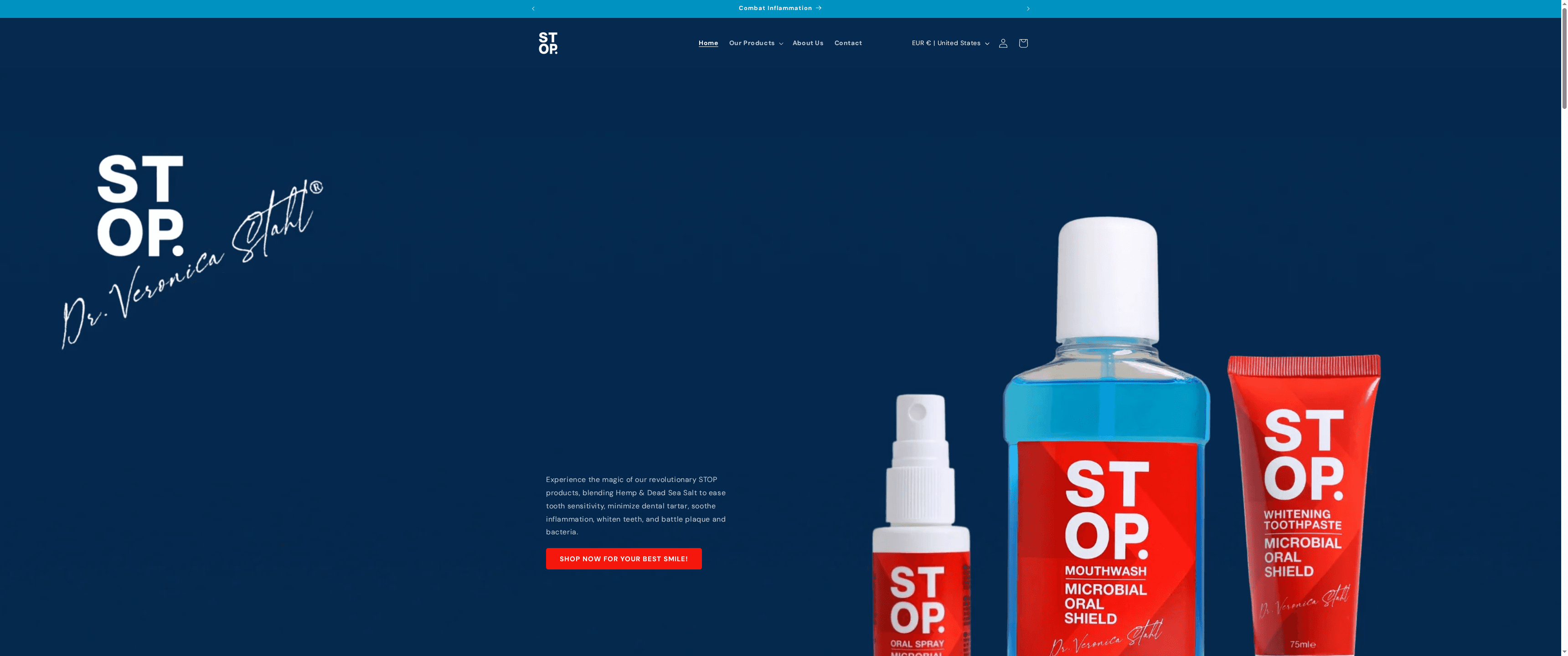
| Product | Focus | Price |
|---|---|---|
| STOP | Mouthwash | Sensitivity relief, fluoride-free mineral rinse |
| STOP | Protective & Whitening Toothpaste | Daily mineral and hemp-based brushing |
| STOP | Protective Oral Spray | On-the-go mineral and hemp support |
If you have a history of frequent cavities or a dentist-identified high caries risk, talk with your dentist about whether fluoride should remain part of your routine alongside these products. Explore the full range on our product page and build a fluoride-free routine around your own sensitivity needs.
This article is general information, not a substitute for advice from a qualified doctor. Consult a qualified healthcare professional about your own circumstances before acting on anything here.
FAQ
Which is better, antiseptic or fluoride mouthwash?
These two target different problems: antiseptic rinses reduce bacteria and help with gum inflammation or bad breath, while fluoride rinses are aimed at strengthening enamel against decay. Choosing between them depends on whether your main concern is gum health or cavity prevention, and some routines use both at different times of day.
Which mouthwash has the highest amount of fluoride?
Prescription-strength fluoride rinses, used under a dentist’s direction, carry higher concentrations than anything sold over the counter. Among OTC products, weekly-strength rinses around 0.09% (900 ppm) are stronger than daily rinses at roughly 0.05%.
What mouthwash is best for removing plaque?
Antiseptic mouthwashes containing chlorhexidine or cetylpyridinium chloride are generally the most effective category for reducing plaque and bacterial load. Fluoride and mineral rinses primarily target enamel strength rather than plaque removal, so they are often used alongside, not instead of, an antiseptic or thorough brushing routine.
Why say no to fluoride at dentist?
Some patients decline fluoride treatments due to a known sensitivity, a preference to limit fluoride exposure, or because they have low caries risk and prefer a mineral-based alternative like hydroxyapatite. This is a personal decision best made with your dentist, who can weigh your specific cavity risk before recommending an alternative.